

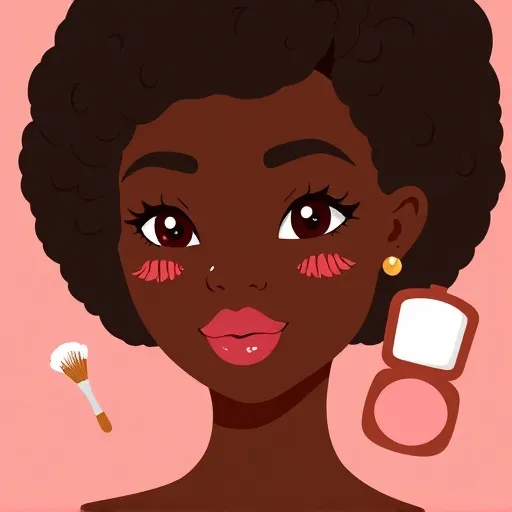
Melanin rich skin ne
Why Natural Makeup for Dark Skin Requires a Different Approach
Here's what most generic beauty tutorials conveniently leave out: melanin-rich skin has its own distinct structural and tonal characteristics that demand a tailored approach. If you've ever wondered why the same routine that works for your lighter-skinned friends looks completely off on you, there's a real reason for that. Skin with more melanin is often more susceptible to post-inflammatory hyperpigmentation, it can appear dry or ashy when the wrong foundation and concealer formulas sit on the surface, and it interacts with light in a completely different way. That last point is a bigger deal than most people realize. A ton of "luminous" and "dewy" products rely on light-reflecting particles that look gorgeous on fair complexions but can turn frosty, metallic, or straight-up ghostly on deeper tones. So when it comes to natural makeup for dark skin, understanding these differences isn't optional — it's the whole foundation.
According to makeup artists who specialize in deeper complexions, the goal with natural makeup for dark skin was never about lightening or masking anything. It's about enhancing. The right approach to natural makeup for dark skin should celebrate depth, even out skin tone only where necessary, and let your skin's natural radiance carry the look. That means reaching for products with rich pigment, warm undertones or neutral undertones, and finishes that mimic real skin instead of plastic. Honestly, once you get this principle, everything else about natural makeup for dark skin starts to click.
The Undertone Question Nobody Explains Properly for Melanin-Rich Complexions
Dark skin isn't a monolith. It spans an incredible range — from cool undertones (think deep ebony with blue-black nuances) to warm undertones (golden-bronze, reddish-brown) to neutral undertones and olive undertones. A huge chunk of frustration around natural makeup for dark skin comes down to mismatched undertones. You buy a foundation that's the right depth but the wrong temperature, and suddenly you're walking around looking gray or pumpkin-orange. It's one of the most common foundation matching mistakes out there.
Quick tip: check the veins on your inner wrist in natural daylight. Blue-purple veins? You're likely cool-toned. Green veins? You're probably warm-toned. A mix of both? Hello, neutral undertone. And if you genuinely can't tell, a neutral or warm-leaning product is almost always the safer bet for deeper complexions, since cool-toned base products are the usual suspects behind that dreaded ashy cast. Getting this right is honestly half the battle with natural makeup for dark skin.
Step 1: Prep and Hydration — The Foundation of Any Natural Look
You can't build a natural finish on dehydrated skin. For dark skin especially, hydration is what keeps foundation from clinging to dry patches and turning gray. Start with a gentle cleanser, follow with a hydrating toner, and layer a moisturizer suited to your skin type. Oily? Go gel-based. Dry? Reach for something creamier. This prep step is non-negotiable when it comes to natural makeup for dark skin.
One skincare ingredient worth knowing about in 2026: niacinamide. It's literally everywhere right now, and for good reason — it supports the skin barrier and helps fade the appearance of dark spots over time, which is a common concern for deeper skin tones dealing with hyperpigmentation. Pair it with a broad-spectrum SPF (yes, melanin-rich skin needs sun protection too — hyperpigmentation doesn't discriminate).
- Cleanse gently — avoid stripping sulfates if your skin leans dry.
- Hydrate with a toner or essence to prep the canvas.
- Moisturize generously and let it absorb for a few minutes.
- Prime only where you need it — pore-blurring on the T-zone, hydrating on cheeks.
Plenty of people skip primer, but for natural makeup for dark skin, a good one is what prevents foundation from oxidizing — that frustrating shift where your base turns a shade darker or more orange as the day drags on. A color-correcting or tone-neutralizing primer is a smart investment here.
Step 2: The Base — Where Most People Go Wrong with Sheer Coverage
This is the heart of any natural look, and the part where dark skin gets underserved the most. The rule is simple: sheer coverage done right beats heavy coverage done wrong. You want your skin to show through, just more even. That's the philosophy behind natural makeup for dark skin — enhancement over full coverage.
Choosing the Right Foundation and Skin Tint Formula
Look for foundation formulas described as "skin tint," "sheer," or "second-skin." These tend to have flexible, forgiving pigments that blend into the skin rather than sitting on top of it. For dark skin, the word to avoid is "matte" — full matte finishes can flatten depth and make rich complexions look dusty. Instead, aim for a natural finish or satin finish. And always, always swatch on your jawline in natural light — never on the back of your hand under store lighting. This is gospel for natural makeup for dark skin.
If you can't find your exact match (a sadly familiar problem for deeper tones), here's a pro move: buy a slightly lighter shade and a deeper one, then mix. A lot of makeup artists do this. It gives you control over both depth and undertone. Alternatively, spot-conceal only where needed — under the eyes, around the nose, on any dark spots — and skip full-face foundation entirely for the most natural result. This technique alone can transform your approach to natural makeup for dark skin.
Concealer and Color Correction for Deep Skin Tones
For dark skin, under-eye shadows often carry a blue or purple tint. A peach corrector or orange corrector neutralizes that beautifully before concealer goes on. This two-step approach is a total game-changer and way more effective than piling on a heavy concealer that eventually creases. When picking a concealer, aim for one that's only slightly lighter than your skin — or even the same shade for the most undetectable finish. Going two or three shades lighter is an outdated trend that reads as "highlighted" rather than "natural." Keeping it subtle is especially important for natural makeup for dark skin.
Step 3: Setting — Without the Flashback and White Cast
Here's a warning that could save your photos: some setting powders contain light-reflecting ingredients or white-based particles that cause "flashback" — a ghostly white cast in photos. On deep skin tones, this is a well-known frustration. In 2026, more brands are finally formulating translucent powders specifically for deeper complexions, but you still need to check labels. Look for finely milled, tinted powders that match your undertone, and apply with a light hand. This single step can make or break your natural makeup for dark skin routine.
Pro tip from a seasoned makeup artist: press, don't sweep. Pressing powder into the skin with a velour puff sets makeup without disturbing the base underneath. Focus on the T-zone and anywhere you crease, and leave the cheeks and high points of the face powder-free for a natural glow.
Step 4: Color — Warming Up the Face with Bronzer and Blush
Natural makeup for dark skin is all about strategic warmth. Cool-toned blushes and contours can look gray or muddy on rich complexions — this is exactly where a lot of "natural" looks fail. Instead, reach for:
- Bronzer in warm bronze, terracotta, or rich brown — applied where the sun naturally hits.
- Blush in berry, coral, warm rose, or brick red — these flatter deep skin gorgeously and look like a natural flush.
- Highlighter in champagne, gold, or copper — bronze-based shimmer looks like real skin radiance, while silver or icy tones can look ashy.
Less is more here. A touch of cream blush blended with your fingers gives the most skin-like finish of all. Cream products, in general, play nicer with natural looks because they melt into the skin rather than sitting on top of it. This is a core principle of natural makeup for dark skin that bears repeating.
Eyes and Brows — Warm Neutral Shadows and Soft Definition
For brows, match your natural hair color — and if your hair is black or very dark, look for "soft black" or "dark brown" rather than true black, which can look harsh. A tinted brow gel gives definition without the drawn-on look. On the eyes, warm neutral shadows — copper, bronze, chocolate, soft plum — flatter deep skin beautifully. Skip the heavy eyeliner and instead smudge a little brown liner into the lash line for subtle definition.
Mascara is your best friend. A lengthening formula in black or soft black opens up the eyes without needing much else. Curl your lashes first — it makes a bigger difference than most people realize. Keeping the eyes soft and warm is a hallmark of natural makeup for dark skin that actually works.
Step 5: Lips — The Finishing Touch with Tinted Balms
A natural look needs balance. If your eyes are soft and minimal, you can afford a slightly bolder lip — think berry, warm brown, brick, or a rosy nude that's actually nude for you (that's key; "nude" is totally relative). Tinted lip balms and sheer lipsticks give that effortless, just-bitten look that pairs perfectly with natural makeup for dark skin.
One small thing that makes a big difference: gently exfoliate your lips and apply lip balm before lip color. Deep skin tones often show lip texture more, and a smooth base makes any lip product look better.
Common Mistakes to Avoid with Natural Makeup for Dark Skin
Let's round up the pitfalls, because avoiding these is half the battle when it comes to natural makeup for dark skin:
- Ashiness — usually caused by cool-toned or white-based products. Always check undertone.
- Oxidation — foundation darkening or turning orange throughout the day. Primer and a well-matched formula prevent this.
- Flashback — white cast in photos from silica-heavy powders. Test before an event.
- Over-powdering — flattens the natural glow and emphasizes texture.
- Going too light with concealer — the reverse-raccoon effect. Stay close to your skin tone.
- Ignoring sunscreen — hyperpigmentation is real and preventable.
The 2026 Landscape — What's Changed for Inclusivity and Shade Ranges
If there's one encouraging takeaway, it's this: the market has finally caught up. In 2026, more brands than ever are launching 40-plus shade ranges with genuine undertone diversity, and "inclusivity" isn't just a marketing buzzword anymore — it's a baseline expectation. Social platforms are full of creators with deep skin tones sharing real-world swatches and application techniques, which means you no longer have to guess in a store aisle. Look for community-driven reviews and user-generated swatch photos before buying anything. The resources for natural makeup for dark skin have never been better.
There's also been a shift toward multi-use, skin-first products — tinted serums, cream blushes that double as lip color, and bronzing drops you can mix into moisturizer. These are ideal for natural makeup for dark skin because they're buildable and forgiving, letting you customize intensity rather than committing to full pigment from the first swipe. That flexibility is everything when you're going for a natural finish.
A Quick Daily Routine Recap for Busy Mornings
For those who want the short version, here's a five-minute natural routine for deep skin tones:
- Cleanse and moisturize (with SPF).
- Dot concealer only where needed — under eyes, spots, around the nose.
- Lightly set the T-zone with a tinted, flashback-free powder.
- Warm the cheeks and temples with cream bronzer and a berry or coral blush.
- Add a swipe of tinted balm and a coat of mascara. Done.
That's it. No ten-step ritual required. The whole philosophy behind natural makeup for dark skin is enhancement, not transformation. Your skin is already beautiful — the products are just there to even things out and add a little warmth and definition.