

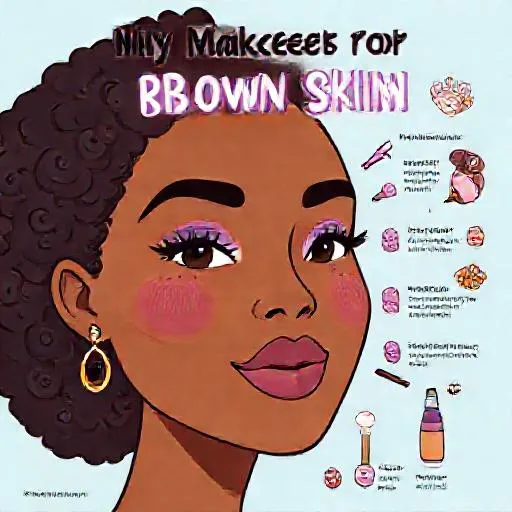
Brown skin is a uniq
Why Makeup for Brown Skin Deserves Its Own Approach
Let's get one thing straight right off the bat: brown skin isn't just "fair skin with a darker shade." It's a completely different canvas with its own quirks, chemistry, and beauty. That matters more than most people realize when it comes to foundation matching and skincare prep. Melanin-rich complexions show hyperpigmentation more visibly, tend to look ashy when the wrong base makeup gets slapped on, and often carry richer undertones that clash hard with products built for lighter skin. This is exactly why makeup for brown skin deserves its own playbook — not a recycled version of someone else's routine.
In 2026, the best makeup for brown skin routines are built around three core principles: undertone accuracy, formula compatibility, and layering technique. Drop the ball on any one of these, and you'll be scratching your head wondering why your look never matches the tutorials. Nail all three, and you'll get that lit-from-within glow that looks completely effortless.
Industry pros now say the conversation has shifted from "inclusion" as a buzzword to real formulation science. A seasoned pro recently pointed out at a beauty industry panel that pigment technology has come so far that deeper shades no longer sacrifice texture or finish quality — a massive leap from just a few years back. That's huge news for anyone searching for quality makeup for brown skin.
Undertone Accuracy and Melanin-Rich Complexion Science Explained
Before you buy a single product, you need to lock in your undertone. This is the subtle hue sitting beneath your skin's surface, and it's the single biggest factor in whether makeup for brown skin looks natural or totally "off."
- Warm undertones: Golden, yellow, or peachy hues. Your veins may look greenish, and gold jewelry tends to flatter you.
- Cool undertones: Red, pink, or bluish hues. Veins look blue or purple, and silver jewelry pops against your skin.
- Neutral undertones: A balanced mix — you might suit both gold and silver, and your veins appear greenish-blue.
Brown skin often carries olive undertones too — that greenish-gold cast sitting between warm and cool. Olive undertones are notoriously tricky because tons of foundation shades pull too orange or too red. In 2026, more brands are dropping dedicated olive-friendly shades, but careful swatching is still non-negotiable when shopping for makeup for brown skin.
Natural daylight is your best friend here. Stand near a window, hold a white sheet of paper next to your jawline, and watch how your skin reacts. If it looks sallow against pure white, you likely lean warm or olive. If it looks rosy, you're probably cool. Compare your chest and neck too — matching to your neck beats matching to your face every time, especially if you deal with surface redness or hyperpigmentation.
Foundation Matching, Oxidation Resistance, and Buildable Coverage Tips
Foundation is where most people struggle, and for brown skin, the stakes are sky-high. A mismatched base makeup is instantly obvious — it either makes you look ashy, gray, or like you're wearing a mask. Finding the right makeup for brown skin starts with understanding what actually works.
- Undertone-first shade matching: Hunt for ranges that organize shades by undertone, not just depth. This saves so much guesswork.
- Oxidation-resistant formulas: Cheaper foundations often darken or turn orange after a few hours. Modern long-wear formulas are way more stable.
- Buildable coverage: Medium, buildable coverage is usually more forgiving than full-coverage matte formulas, which can look flat on brown skin.
- Hydrating or satin finishes: These reflect light beautifully on deeper complexions and dodge that dreaded "chalky" effect.
Apply foundation in thin layers rather than one heavy coat. Use a damp sponge or a dense brush to press the product into the skin rather than sweeping it around. Focus coverage on the center of the face and blend outward — this creates natural dimension instead of a flat canvas. Swatch on your jawline and let it sit for at least 15 minutes before deciding. Oxidation is real, and what looks perfect in store lighting may shift once it settles. That's just smart shopping for makeup for brown skin.
Color Correction, Concealer Placement, and Setting Powder for Deep Complexions
Brown skin often has hyperpigmentation around the mouth, under the eyes, or on the cheeks. Concealer alone can look gray if it's too light, so color correction genuinely matters when building makeup for brown skin looks.
- Peach or orange correctors: These neutralize deep blue or purple discoloration under the eyes. A thin layer goes a long way.
- Concealer one shade lighter: Only go one shade lighter than your foundation — anything more creates that ghostly under-eye look.
- Yellow-based correctors: Great for neutralizing dark spots and uneven areas without adding pink or red.
Always set your concealer with a finely milled setting powder in a warm or neutral tone. Translucent powders can sometimes leave a white cast on deeper skin, so tinted setting powders are often the smarter choice for makeup for brown skin.
Blush, Bronzer, and Highlighter Shades That Complement Warm Undertones
This is where the magic happens — and where way too many people play it safe. Brown skin can carry incredibly rich, saturated colors, and skipping blush or bronzer often makes the face look flat.
For blush, think beyond pale pinks. Shades like brick red, burnt orange, berry, and deep coral look stunning on brown skin. Cream blushes tend to blend more seamlessly and give a natural flush. Apply slightly higher on the cheekbones and blend upward toward the temples for a lifted effect.
The key with bronzer is choosing a shade that's warm without being muddy. Look for rich caramel, chestnut, or terracotta tones. Avoid anything with too much gray or ash — that's the fastest way to look dull. Apply to the perimeter of the face and the high points where the sun naturally hits.
Gold, bronze, rose gold, and copper highlighters are your best friends here. These tones complement warm and neutral undertones and create a glow that looks lit from within. Skip icy silver or stark white highlighters — they tend to look chalky on brown skin. A liquid or cream highlighter gives a more skin-like finish than a heavy powder. This trio is the secret sauce of standout makeup for brown skin.
Eye Makeup, Jewel Tone Eyeshadow, and Eyeliner Definition for Brown Eyes
Brown eyes — the most common among people with brown skin — are incredibly versatile. Warm metallics, jewel tones, and rich earth shades all flatter beautifully.
- Eyeshadow: Bronze, copper, emerald, plum, sapphire, and burnt sienna are all winners. Shimmery finishes reflect light and make the eyes look brighter.
- Eyeliner: Deep brown, black, and even navy or plum liners add definition without being harsh. For a softer daytime look, smudge the liner slightly.
- Mascara: Lengthening and volumizing formulas work well, but make sure the brush deposits enough product — some formulas get lost on fuller lashes.
One common mistake: under-applying eyeshadow. Because brown skin has more natural depth, colors can appear muted once blended. Build intensity gradually and use a solid eyeshadow primer to keep shades true to pan. It's a small step that makes a big difference in any makeup for brown skin routine.
Lip Color, Nude Lipstick Selection, and Lip Liner Pairing by Undertone
Brown skin and bold lips are a match made in heaven. The trick is finding shades that complement your undertone rather than fighting it.
- Warm undertones: Brick red, terracotta, burnt orange, warm berry, and caramel nudes.
- Cool undertones: Blue-red, plum, mauve, wine, and cool-toned browns.
- Neutral undertones: You can usually swing both directions — rosewood and spiced brown are safe bets.
Nude lipstick is famously difficult to get right on brown skin, because "nude" should mean your lips but better — not a washed-out beige. Look for nudes with a bit of warmth: caramel, mocha, tawny, and chestnut tones. Pair with a slightly darker lip liner to define the shape and add depth. A pro recently noted that lip liner is making a major comeback in 2026, and for brown skin especially, it's a game-changer for creating dimension and preventing bold shades from feathering.
Skincare Prep, Hydration, and SPF Protection for Melanin-Rich Skin
You can't talk about makeup for brown skin without mentioning skincare. A smooth, well-hydrated base makes everything apply better — foundation sits more evenly, colors blend more seamlessly, and everything lasts longer.
- Hydration is essential: Dehydrated skin makes foundation look patchy and emphasizes texture. Layer a hydrating serum under your moisturizer.
- Exfoliate gently: Regular, gentle exfoliation keeps skin smooth and helps prevent product from clinging to dry patches.
- Don't skip SPF: Sun protection helps prevent hyperpigmentation from deepening. Choose a formula that doesn't leave a white cast — many modern chemical or tinted sunscreens work beautifully on brown skin.
- Primer matters: A good primer smooths texture and helps makeup for brown skin stay put, especially in humid climates.
Skincare and makeup are increasingly blending into one category. In 2026, more base products include skincare ingredients like niacinamide and hyaluronic acid, offering a hybrid approach that's especially helpful for brown skin dealing with uneven tone or texture.
Common Application Mistakes and Beginner-Friendly Routine Building
Even with great products, a few habits can sabotage your look. Here are the ones to watch out for with makeup for brown skin:
- Going too light with foundation: This is the number one mistake. Match your neck, not your lighter hand or a photo in bad lighting.
- Over-mattifying: Matte finishes can look flat on brown skin. A little natural shine or satin finish looks healthier and more dimensional.
- Ignoring setting powder: Without setting, cream products can slide, especially in warm weather. But choose finely milled, tinted powders.
- Skipping blush and bronzer: These add life and warmth — don't leave the face monochromatic.
- Using dull eyeshadow: Brown skin can handle and deserves high-pigment colors. Sheer, powdery shadows often disappear.
If you're just starting out, you don't need twenty products. A solid routine for brown skin can be built with five to seven items: a hydrating primer or moisturizer, a well-matched foundation or tinted skin tint, a peach-toned corrector plus concealer, a warm or neutral cream blush, a buildable bronzer, a gold or bronze highlighter, and a versatile lip shade — maybe a warm nude and a berry. Master application first, then expand into eyeshadows and liners as you get comfortable.
The 2026 Beauty Landscape for Brown Skin Makeup Evolution
It's worth acknowledging how much the beauty world has evolved. Just a few years ago, finding a foundation match for deeper brown skin meant hunting through specialty brands. Today, major retailers offer extensive shade ranges, and formulation technology has caught up. The focus has shifted from simply having shades to making sure those shades perform equally well across the board.
Leading brands are now investing in research specifically for melanin-rich skin — studying how pigments interact with different undertones, how formulas wear in various climates, and how to prevent oxidation. Social platforms have also democratized education. Content creators and beauty professionals share detailed, shade-specific tutorials, and communities swap recommendations openly. The result? A far more informed consumer base and products that get scrutinized — and improved — in real time. The future of makeup for brown skin has never looked brighter.